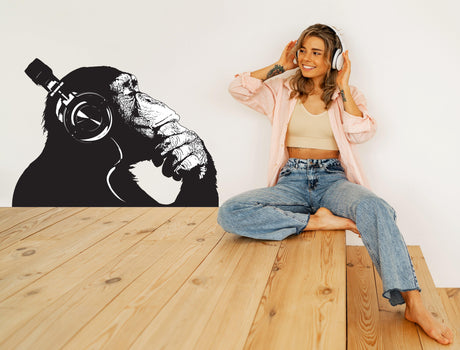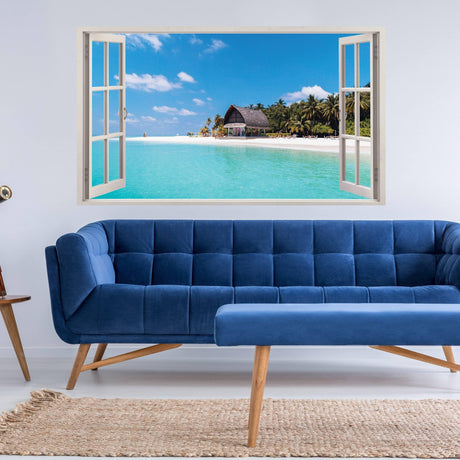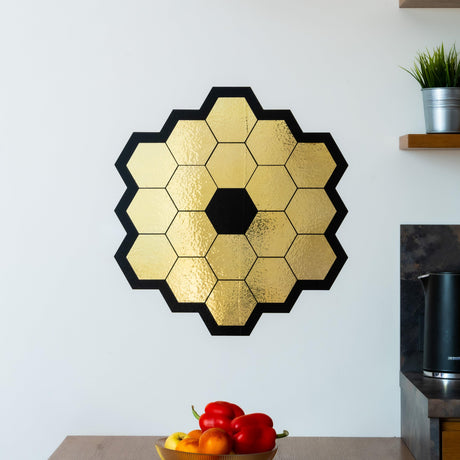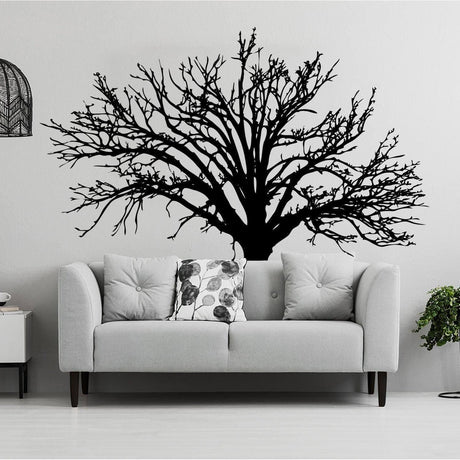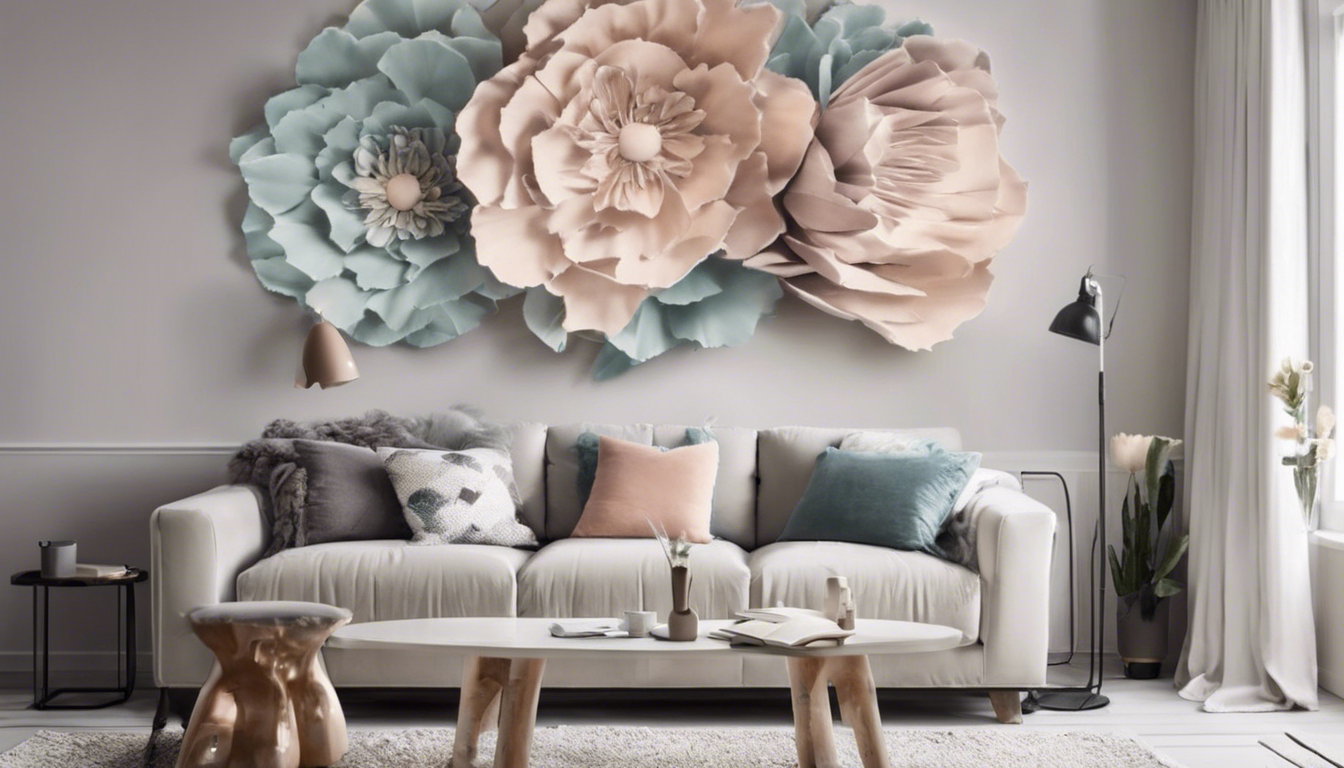
Wall decor includes more than artwork. A wall can provide a focal point, storage, information, privacy, texture, protection or acoustic support. This guide compares formats by function, dimensions, wall construction, installation and care. For visual hierarchy, gallery spacing and colour composition, use the wall art layout guide.
Define the wall’s primary function
| Function | Possible format | Main question |
|---|---|---|
| Visual focal point | Print, canvas, decal, mural or sculpture | What should receive attention from the main viewpoint? |
| Information or branding | Lettering, sign, logo decal or rigid panel | Can the message be read at the required distance? |
| Storage or display | Shelf, ledge, pegboard or cabinet | Can the wall and fixings support the complete load? |
| Privacy or zoning | Film, curtain, screen or partition treatment | What level of separation, light and access is required? |
| Texture or surface character | Slatted panel, textile, relief or physical 3D object | How much depth, cleaning and maintenance are acceptable? |
| Acoustic support | Documented acoustic panel or system | Is the performance supported by product data and correct installation? |
One wall should not be expected to carry storage, a large mural, several signs and a quiet visual background at the same time. Rank the functions before selecting products.
Compare common wall decor formats
| Format | Best considered for | Technical planning point |
|---|---|---|
| Framed print or canvas | Movable artwork and photographs | Complete dimensions, weight, reflection and fixings |
| Wall decal or lettering | Graphics, names, information and selected focal accents | Surface compatibility, installed size and removal |
| Wallpaper or mural | Broad continuous coverage | Wall measurements, crop, panels, seams and preparation |
| Mirror | Reflection, light distribution and practical use | Weight, safety backing, edge condition and secure mounting |
| Shelf or ledge | Storage and display of physical objects | Wall type, fixings, projection, load and falling-object risk |
| Rigid decorative panel | Texture, protection or architectural detail | Panel weight, joints, fire or performance data where relevant, and access |
| Textile or hanging | Soft texture and lightweight coverage | Mounting, dust, cleaning and clearance from heat |
| Business sign | Identification, directions and service information | Legibility, authorised branding, local requirements and mounting |
| Physical 3D printed decor | Sculptural objects, shelves and themed displays | Real width, height, depth, material, fixings and care |
Measure usable space and physical projection
Measure width and height after excluding doors, windows, switches, vents, trim and moving furniture. For shelves, mirrors, signs and 3D objects, also measure depth from the wall. Check door swings, curtains, circulation and the space required to clean or remove the product.
- Mark the outer boundary with removable tape.
- Record the wall construction and finish.
- Measure furniture and fixtures near the wall.
- Check viewing and walking routes.
- Confirm the complete product dimensions rather than only the visible front face.
Identify the wall construction before choosing fixings
Drywall, masonry, timber, tile, glass and lightweight partitions require different mounting methods. A decorative product’s weight is only one part of the calculation. Include displayed objects, brackets and dynamic contact. Use fixings and installation instructions appropriate for the complete wall and load.
- Check for concealed wiring, pipes and building services.
- Do not mount heavy objects to loose finishes or unknown weak substrates.
- Confirm whether hardware is included.
- Use professional installation when wall construction or access is uncertain.
- Inspect mounted products periodically for movement or damage.
Separate adhesive products from mounted objects
A wall decal depends on the coating and adhesive contact. A shelf or panel depends on mechanical or structural support. A mirror can require specialist hardware or adhesive designed for the backing and wall. Do not transfer a surface-preparation rule, load claim or removal expectation between these categories.
Plan privacy and acoustic claims carefully
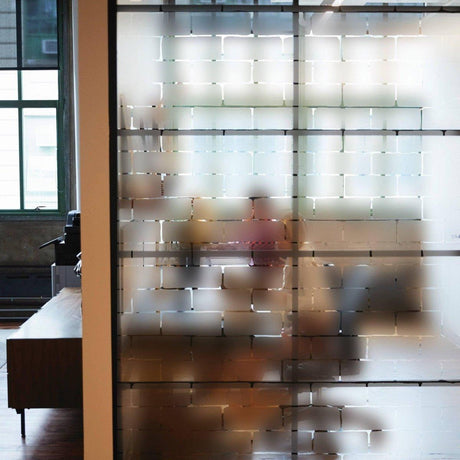
Decorative film can blur a view, and a textile can change the feel of a room, but these observations do not prove complete privacy, fire performance or acoustic ratings. Use documented systems when a project requires measurable light transmission, sound absorption, fire classification or another regulated property.
Plan safe placement
- Keep heavy or breakable objects away from beds, cots, seating and high-contact routes.
- Keep shelves and projections clear of doors, stairs and head-height circulation.
- Keep textiles, plastics and adhesive graphics away from unapproved heat or open flame.
- Keep small detachable pieces and accessible edges away from young children and pets.
- Do not obstruct exits, safety signs, vents, detectors, controls or electrical equipment.
Sequence the installation
- Repair moisture, loose paint and structural defects.
- Complete painting and allow coatings to cure.
- Install fixed lighting, shelves, panels and large mounted objects.
- Position murals, decals and signs relative to the completed fixed elements.
- Add framed art and smaller accessories last.
This order reduces the risk of drilling through finished graphics or discovering that fixed furniture hides the design.
Match maintenance to the material
Paper, canvas, vinyl, glass, wood, metal, textiles and 3D printed polymers require different care. Check approved cleaners, moisture limits, abrasion, access and replacement parts. Do not transfer a warranty or cleaning method from one category to another.
Plan future changes
Consider whether the room is rented, frequently reorganised or used for changing business information. A movable frame, replaceable decal or modular shelf may suit a changing space better than a permanently bonded panel. Record dimensions, artwork and material specifications so replacements remain consistent.
Frequently asked questions
Should every wall be decorated?
No. Open wall area supports circulation, maintenance and visual balance.
What should be planned first: furniture or wall decor?
Plan the room function and major furniture first because they define usable wall area, load zones and viewing positions.
Can a decal support a shelf or mounted object?
No. Adhesive graphics are decorative surface products and should not be treated as structural support.
Can wall decor hide damaged paint or dampness?
It may conceal appearance temporarily, but the underlying defect should be repaired before installation.
How do I combine wall art with functional decor?
Choose the storage, lighting and fixed functions first, then use the wall art layout guide to create a clear visual hierarchy around them.