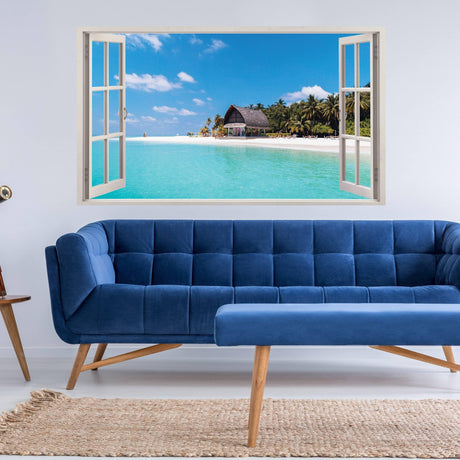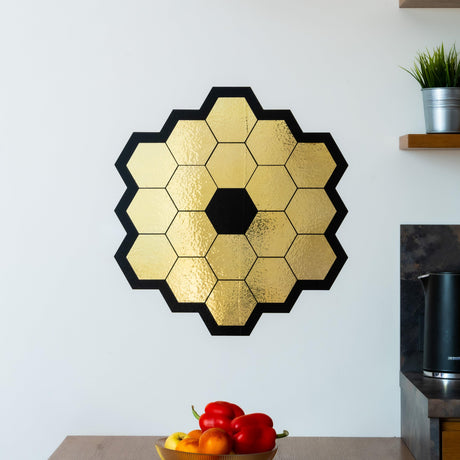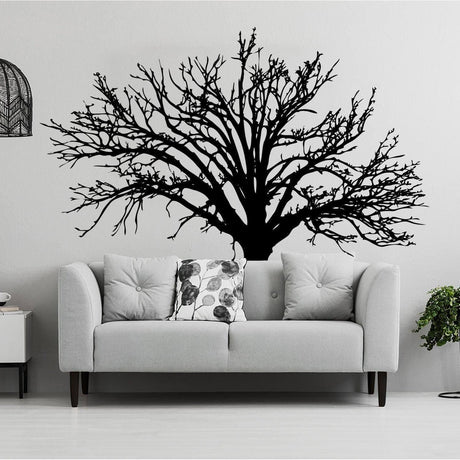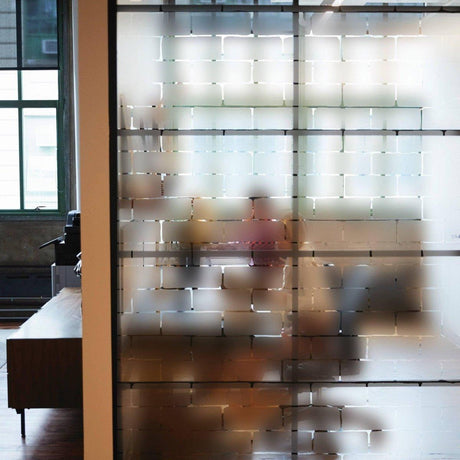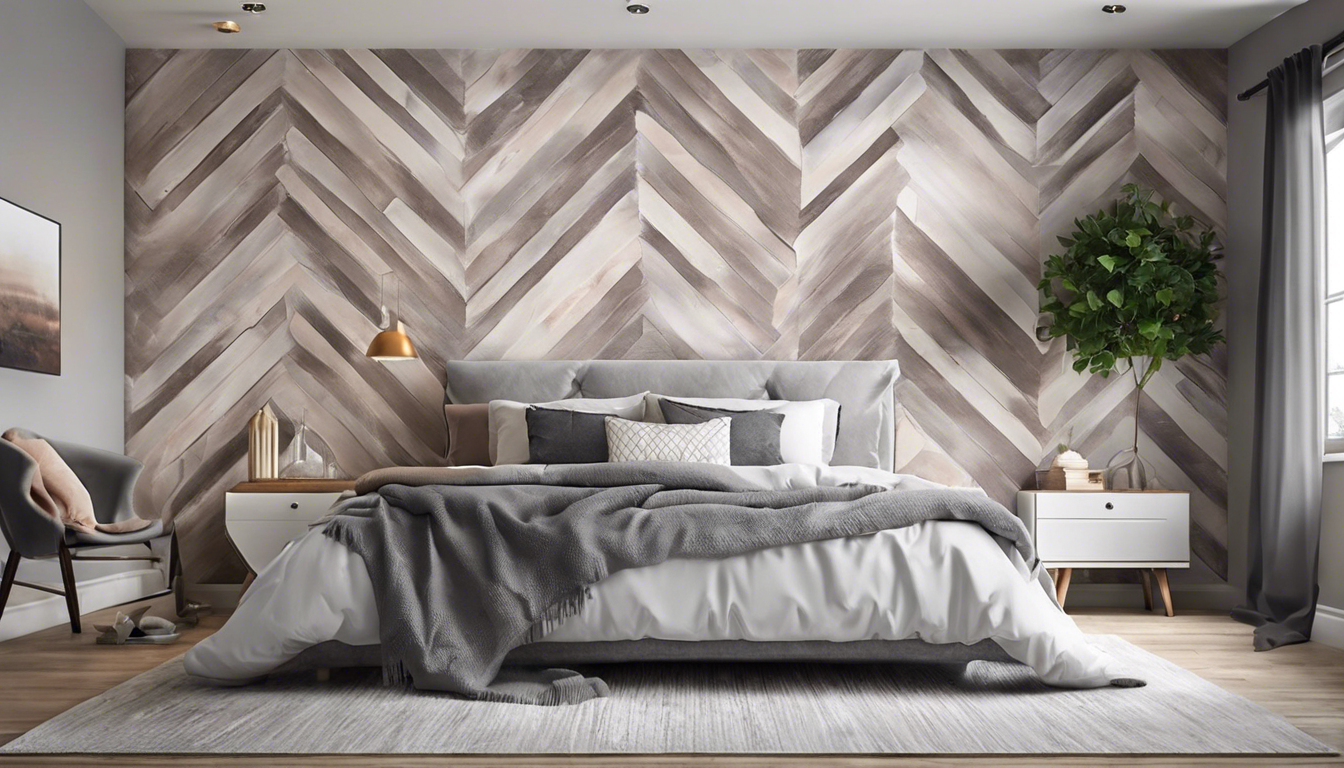
An accent wall gives one surface a stronger visual role than the surrounding walls. It can be created with paint, wallpaper, decals, a mural, panels or a carefully arranged group of artwork. The right option depends on the wall, room proportions, installation limits and desired level of commitment.
Select the wall by function
Look for the wall that naturally receives attention when entering the room or using its main seating area. Avoid choosing a wall only because it is empty. Doors, windows, built-in furniture and strong architectural features influence the composition.
Compare material options
- Paint creates a continuous color field.
- Wallpaper and mural panels create a connected surface.
- Wall decals add separate graphics or lettering.
- Rigid and wooden panels require suitable support and fixings.
- Framed art can be rearranged but requires a mounting plan.
Each format has separate preparation, care and guarantee terms.
Plan color and scale
Consider existing flooring, furniture, curtains and lighting. Dark or high-contrast walls can appear visually closer. Mark large graphic dimensions with removable tape and assess them from the normal viewing distance.
Check the surface
Inspect paint condition, texture, moisture and previous repairs. Adhesive products generally need a clean, stable and fully cured surface. Panels and framed work need fixings appropriate for the wall construction and weight.
Create a measured layout
Keep important details clear of furniture and corners. Establish level and vertical references before installing. For multi-part designs, approve a proof showing final size, crop, seams and spacing.
Frequently asked questions
Does an accent wall need to be dark?
No. Contrast can come from color, texture, pattern, scale or material.
Can decals create an accent wall?
Yes, when the design, material and surface are compatible. Confirm product-specific installation and removal guidance.