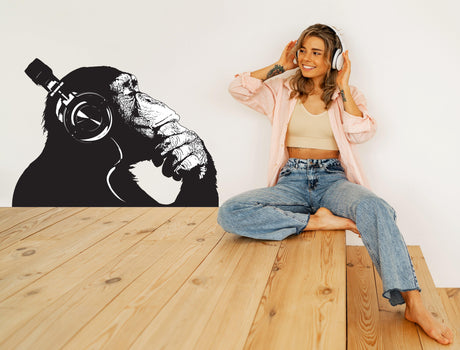
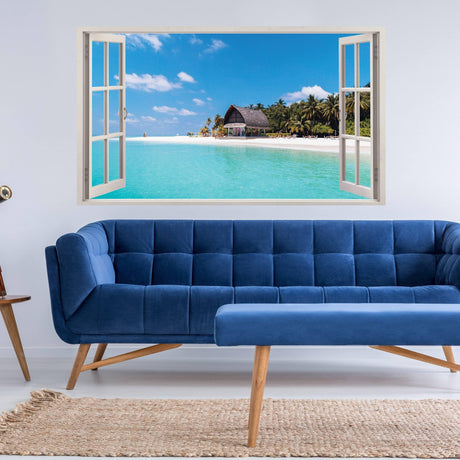
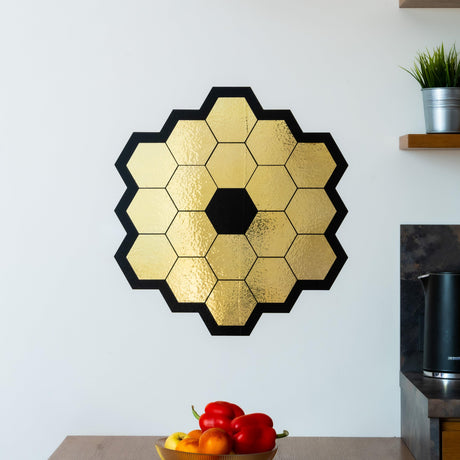
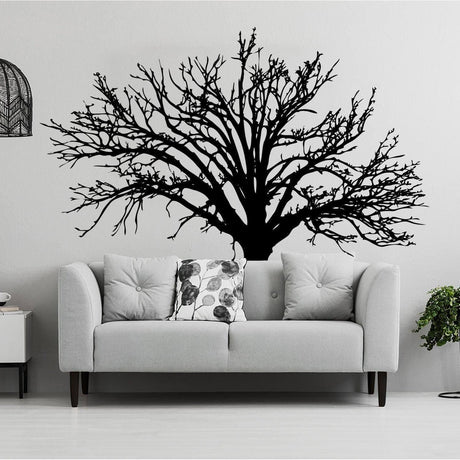
Modern wall decals often use simple geometry, restrained color, typography or abstract forms. The term wall tattoo is also used for some vinyl decals, especially cut lettering and fine-line designs. It is a marketing description, not a separate installation technology, so the exact material and application method must still be confirmed.
What is a wall decal?
A wall decal is an adhesive decoration applied to a suitable wall surface. It may be a printed illustration, cut-vinyl lettering or separate shapes arranged into a composition. Unlike wallpaper, a decal usually covers selected areas rather than the entire wall. Modern describes the design style, not a promise about removability or reuse.
Define the visual direction
Minimal line art, geometric patterns, organic shapes, clean lettering and abstract color blocks create different moods. Select one main approach and connect it to existing furniture, lighting and architectural lines rather than combining every current style.
For shape-led designs, compare our geometric and abstract wall stickers. Check the individual design proportions and number of pieces rather than choosing from a room image alone.
Choose the decal format
Cut vinyl suits solid-color lettering and simple line work. Printed decals allow several colors, textures and gradients. Multi-piece sets support flexible spacing. Large connected images may be better produced as mural panels. The product format should follow the artwork and wall size.
Plan size and negative space
Measure the usable wall and mark the proposed composition with temporary tape. Leave open wall around the design. A small decal can feel lost on a wide surface, while an oversized pattern can compete with furniture and lighting.
The wall decal measuring guide shows how to compare both dimensions and the space remaining around a design before you order.
Connect the design to furniture
A horizontal design can relate to a sofa, bed or sideboard. A vertical composition may fit an entryway or narrow space. Align the decal with the furniture or normal viewing position rather than automatically centering it on the entire wall.
Choose color and finish
Neutral colors integrate easily, while strong contrast creates a focal point. Matte, gloss, metallic and transparent finishes react differently to light. Screen colors are approximate, and the wall color can influence transparent or pale sections.
Use typography carefully
Keep wording concise and readable from the intended distance. Confirm spelling, capitalization, line breaks and alignment in the proof. Very thin strokes or small gaps may not reproduce or transfer reliably at compact sizes.
For a name, quote or short message, use our wall lettering guide to fonts and sizing before approving the final layout.
Match the design to the room
A bedroom may suit lower contrast and simpler compositions. A workspace can use controlled geometry or concise information. A living room can support a wider focal design. Kitchens and bathrooms require a location and product suitable for their heat, grease, moisture and cleaning conditions.
Use authorized artwork
Choose original or licensed designs. Do not reproduce branded patterns, logos, characters or protected illustrations without permission. For custom work, approve final dimensions, colors, crop and cut paths.
Prepare and install accurately
Check that the wall is clean, stable and fully cured. Establish level references and arrange all pieces first. Apply gradually with even pressure and avoid stretching. Use a spacing template for repeated shapes or separate letters.
Plan care and removal
Follow the cleaning guidance for the exact finish. Do not assume every wall tattoo is washable, removable without marks or reusable. Paint quality, curing, wall condition and installation time affect removal.
Common mistakes to avoid
- Choosing scale from a styled mock-up rather than measurements. Mark the real dimensions on the wall before ordering.
- Combining too many competing shapes, quotes and colors. A restrained visual hierarchy usually looks more intentional.
- Using very fine details at a size that cannot reproduce cleanly. Check minimum line widths and proof the design at final size.
- Ignoring contrast. A low-contrast decal can disappear on the wall, while excessive contrast can dominate the room.
- Copying protected artwork or logos without permission. Use original or properly licensed content.
Frequently asked questions
Is a wall tattoo different from a wall decal?
Usually the term describes a wall decal or cut vinyl design. Confirm the actual material and application method on the product listing.
Will a modern decal suit every interior?
No. Suitability depends on scale, color, room function, furniture and the amount of open wall space.
Can a modern wall decal be customized?
Often yes. Confirm dimensions, colors, artwork rights, production limits and a final proof.
Can fine-line artwork be produced at any size?
No. Thin lines and narrow gaps can require adjustment when the design is reduced.
Choose a design for your room
Explore all wall decals and wall stickers to compare graphics, lettering and room-specific designs. Open the product page to check its size options, actual material and installation method before purchasing.