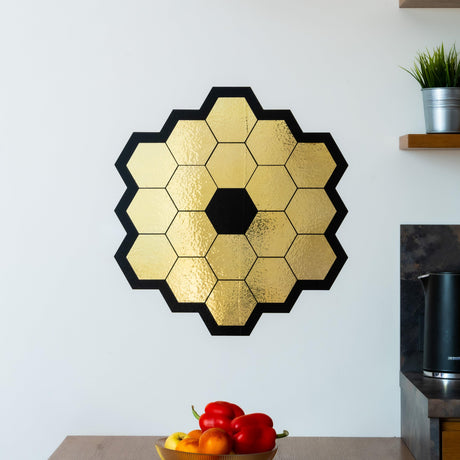
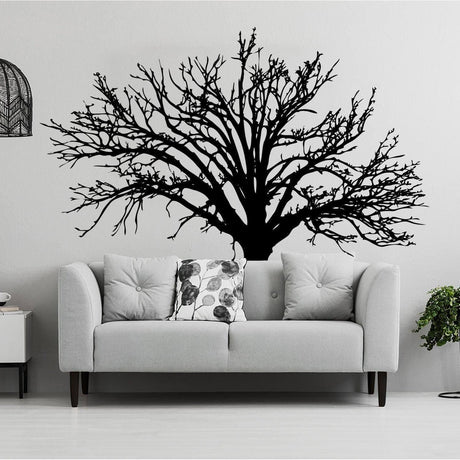
Wall stencils create a repeated painted pattern rather than leaving an adhesive decoration on the wall. Accurate spacing, suitable paint and controlled application determine the result.
Choose the pattern scale
Small patterns suit borders and compact areas, while large motifs need enough open wall and viewing distance.
Check the wall and paint
The surface should be clean, dry, stable and fully cured. Confirm that the new paint is compatible with the existing coating.
Plan alignment
Mark level reference lines and test the repeat on paper. Corners, sockets, trim and furniture can interrupt the pattern.
Control paint quantity
Excess paint can bleed under the stencil. Use the tool and application method recommended for the selected paint and stencil.
Lift at the correct time
Remove the stencil carefully according to the paint method, then clean or reposition it only as instructed.
Use safety controls
Protect floors and furniture, ventilate when required by the paint instructions and keep tools and wet coatings away from children.
Frequently asked questions
Is a wall stencil the same as a wall decal?
No. A stencil guides applied paint, while a decal remains as an adhesive decorative element.
Can a stencil hide damaged paint?
No. Loose, damp or unstable surfaces should be repaired before decorative work.