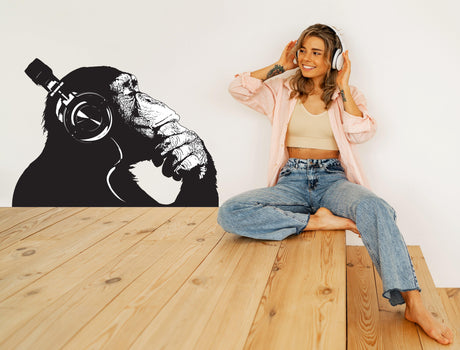
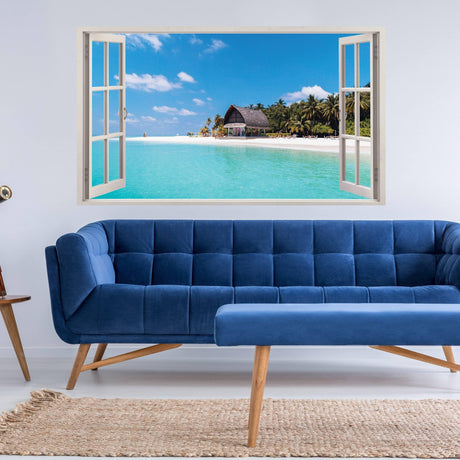
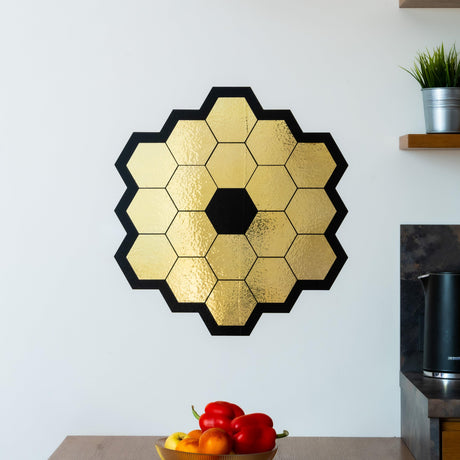
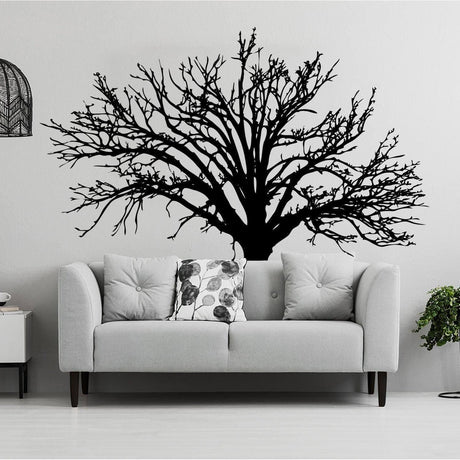
Mural stickers create a large visual composition using one wide decal or a coordinated set of pieces. They differ from wallpaper murals that cover the complete wall with connected panels. Before ordering, confirm the product construction, finished dimensions, included sections and intended surfaces.
Decide whether a mural sticker fits the project
Choose a mural sticker when visible wall space should remain around the design or when separate elements need flexible placement. Choose a panel mural or wallpaper system when the artwork must cover the surface continuously from edge to edge.
Select the focal wall
The design should be easy to understand from the main entrance, seating area or working position. Avoid walls broken by too many shelves, switches or doors. In a narrow room, a simpler composition with open space can be easier to read than a dense scene.
Measure the usable area
Measure the uninterrupted wall after accounting for furniture, skirting, coving, sockets, switches and future room changes. Compare this usable area with the finished design dimensions, not only the shipping sheet or package size.
Match scale to viewing distance
Fine details need enough distance to be understood. Mark the proposed outline with low-tack tape and inspect it from the normal viewing position. For a design made from separate pieces, test the widest and tallest possible arrangement before ordering.
Choose artwork that can be reproduced
Use original artwork, licensed assets or a design supplied for authorized use. Avoid copied characters, brand logos and images taken from search results. A custom image must have enough resolution at the final print size, and important subjects should not fall on cut lines or behind furniture.
Review color and wall interaction
Repeat selected colors already present in furniture or textiles for a connected result. The physical print can differ from a screen preview, and the underlying wall may influence transparent or light-colored sections. Request product-specific color or opacity information when this matters.
Check the surface and material
Inspect for loose paint, dust, moisture, texture and residue. Let fresh coatings cure according to their manufacturer. Confirm whether the sticker uses transfer film, separate peel-and-stick pieces or connected sections. Do not apply one product's cleaning, warranty or removal claims to another material.
Preview the complete arrangement
Lay out all parts in their intended order before removing backing. Use paper templates or temporary tape to test the composition. Confirm spacing, alignment and orientation from a distance, especially when several sections must create one scene.
Install without stretching
Apply one manageable section at a time. Support the uninstalled material and smooth from the secured area outward using even pressure. Stretching can distort the design and encourage edges to lift. Large or wide pieces are easier to control with a second person.
Care and removal
Use only cleaning methods approved for the exact finish. Removable does not guarantee reuse or identical results on every wall. Paint type, curing, texture, humidity and installation time affect removal. Peel slowly at a low angle and stop if the wall coating moves.
Frequently asked questions
Is a mural sticker the same as a wall mural?
Not always. A mural sticker often leaves wall space around one decal or several pieces, while a wall mural usually forms a connected image across a large area.
Can a mural sticker cover textured paint?
Texture reduces adhesive contact. Check the exact product guidance and test the intended surface first.
Can the pieces be arranged differently from the product image?
Only when the design is supplied as separate elements and the product instructions permit flexible placement.
Can one person install a large mural sticker?
It depends on size, construction and experience. A helper can support the material and maintain alignment.