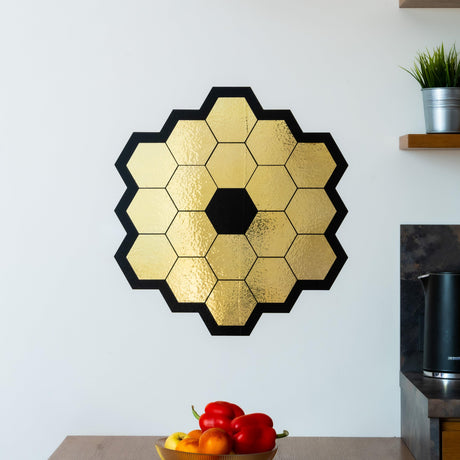
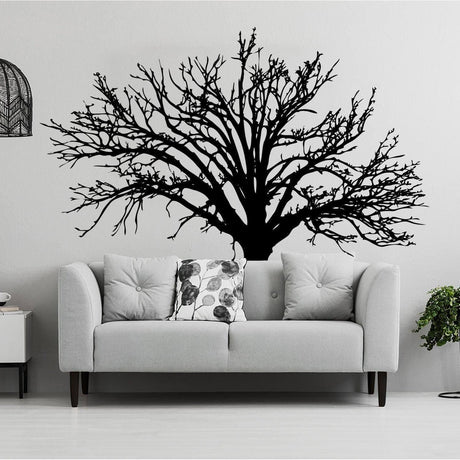
Custom decal printing starts with a practical question: where will the decal be used? A logo for a painted office wall, a product label, a shop window graphic and an outdoor equipment sticker may look similar on screen, but they require different materials, adhesives, finishes and artwork preparation.
This guide focuses on pressure-sensitive vinyl decals—the printed or cut graphics commonly used on walls, glass, signs, equipment, packaging and vehicles. Waterslide transfers, static clings and paper labels are separate product types and should not be specified as if they were interchangeable.
Start with the application, not the artwork
A useful production brief should answer these questions before a file is prepared:
- What surface will receive the decal?
- Will it be used indoors or outdoors?
- What are the finished width and height?
- How many identical pieces are required?
- Is the decal temporary, medium-term or intended to remain in place?
- Will it be exposed to sunlight, water, cleaning chemicals, abrasion, heat or frequent handling?
- Should the background be transparent, white or a printed color?
- Will the customer install it, or is professional installation required?
These answers determine the specification. Choosing material only by price often creates a decal that prints correctly but performs poorly in its real location.
Printed vinyl or cut vinyl?
Printed vinyl decals
Printed decals reproduce photographs, gradients, multiple colors and detailed artwork. The image is printed onto a film and can then be contour-cut to a simple or complex outer shape. Depending on the application, a laminate may be added to protect the print.
Cut vinyl lettering and graphics
Cut vinyl uses solid-colored film without printing the design. A plotter cuts letters, logos or shapes from the selected color. Unwanted vinyl is removed, and transfer film keeps the remaining elements aligned during installation. This format works well for lettering, simple logos, opening hours and single-color graphics.
Which format should you choose?
Use printing when the design needs full color, fine detail or a photographic image. Use cut vinyl when the design is composed of solid shapes and available film colors. A production team may recommend simplifying very small details because thin strokes, sharp corners and tiny isolated pieces are harder to cut, weed, transfer and install reliably.
Prepare artwork that can be produced accurately
Vector files
Vector artwork is preferred for logos, lettering and cut lines because it can be enlarged without losing edge quality. Common production formats include PDF, EPS, SVG and AI, but the file must contain actual vector paths rather than a low-resolution image placed inside a vector document.
Raster images
Photographs and painted artwork are raster images. Their suitability depends on pixel dimensions at the final printed size, not simply on the file format. A small web image cannot become a sharp wall-sized print by saving it as a PDF.
Fonts and linked files
Convert fonts to outlines or supply the licensed font if editing is required. Embed linked images. Missing fonts and external links can change the appearance when the file is opened on another system.
Color expectations
Phone screens, office monitors and printed vinyl use different color systems. Very bright screen colors may not reproduce identically in print. For brand-critical work, provide a defined color reference and approve a physical sample or proof when the project justifies it.
Cut paths and spacing
A contour-cut decal needs a defined outer path. Leave enough space between the cut and important text or image details. For sheets containing many individual stickers, define whether they should be supplied as separate pieces, kiss-cut on a backing sheet or cut through individually.
Choose the material and adhesive
- Removable adhesive: useful when later removal is part of the project, provided the surface is suitable and stable.
- Permanent adhesive: selected when stronger long-term bonding is required. “Permanent” describes the adhesive category, not an assurance that it can never be removed.
- Opaque film: helps block the color or graphics beneath the decal.
- Clear film: allows the surface to remain visible, but printed colors and white areas need special consideration because standard printers may not print white.
- Conformable vehicle film: designed for curves and recesses when the exact product specification supports that application.
- Specialty finishes: metallic, reflective, translucent, textured and glow-effect films each have specific limitations.
The surface matters as much as the film. Smooth painted walls, glass, powder-coated metal, plastic and vehicle paint all behave differently. Low-energy plastics, silicone, fresh paint, dust, wax and textured walls can reduce adhesion.
Finishing options
Lamination
A clear laminate can provide additional protection against handling, cleaning, sunlight and abrasion. The correct laminate must be compatible with the printed film and the intended surface. Lamination also changes thickness and flexibility.
Contour cutting
Contour cutting follows the outline of a printed design. A simple outer shape is generally more robust than many narrow projections or tiny internal cutouts.
Transfer film
Transfer film is used for separate letters and cut shapes that must remain in position relative to one another. It is removed after the vinyl has bonded to the surface. See the transfer-film application guide for the basic sequence.
Sheets, rolls or individual pieces
The best packing format depends on quantity, decal size and the customer’s application process. A business ordering repeated labels may prefer organized sheets, while a large wall logo may be supplied as numbered sections with transfer film.
What a production proof should show
Do not approve only a screenshot of the design. A useful proof should confirm:
- finished dimensions;
- quantity;
- material and finish;
- background color or transparency;
- cut line;
- orientation;
- spelling and contact details;
- panel or sheet layout;
- any expected crop or bleed.
For QR codes, scan a physical-size test from the expected viewing distance. The QR code sticker guide explains contrast, quiet space and placement.
How Decords handles a custom decal order
A typical Decords workflow begins with the intended use, dimensions, quantity and artwork. The file is checked for production issues, and the customer reviews the relevant size, crop and layout before manufacturing. The design is then printed or cut, finished, inspected and packed for the selected application.
The exact process varies by product. A full-color contour-cut sticker, cut lettering and a large wall graphic do not use the same production sequence. The printed vinyl wall decal production guide provides a closer look at artwork preparation, printing, cutting and quality control.
Common ordering mistakes
- Supplying only a screenshot of a logo.
- Giving the design size but not the available installation area.
- Assuming one adhesive suits every wall, plastic or painted surface.
- Using text that becomes unreadable at the finished size.
- Approving a proof without checking spelling, orientation and quantity.
- Requesting outdoor durability without describing sunlight, cleaning and abrasion.
- Installing over wax, silicone, dust, fresh paint or damaged coating.
Frequently asked questions
What file should I send for a logo decal?
A vector PDF, EPS, SVG or AI file is usually the strongest starting point. If only a raster image exists, send the largest original version rather than a copy downloaded from social media.
Can every image be contour-cut?
Most designs can be given an outer cut shape, but extremely detailed edges may need simplification. The final cut should suit the size, material and installation method.
Do printed decals need lamination?
Not always. The decision depends on exposure, cleaning, abrasion, intended service period and the selected print-and-film system.
Can a decal be removed without marks?
Removal depends on the adhesive, duration, heat, surface and condition of the coating beneath it. Test when the surface or future removal is important.
Can Decords print one custom decal?
Available quantities depend on the product, size and finishing method. Submit the exact dimensions, quantity and artwork for a current production assessment.
Order a custom decal
Start with the custom vinyl decal product, browse the custom and personalized collection, or send Decords your artwork and project specification.